We hear a lot about ResOps, ResearchOps, or Research Operations in this day and age but what exactly is it? Essentially it is about UX Research practices and Frameworks. It’s about reducing admin tasks and streamlining the research processes for researchers to get on with what they need to do. Having a dedicated employee to run ResOps is a great luxury and it is justifiable with a big enough research team, but what if the team is too small to justify it? Well, it’s all part of the job of being a researcher in that case.
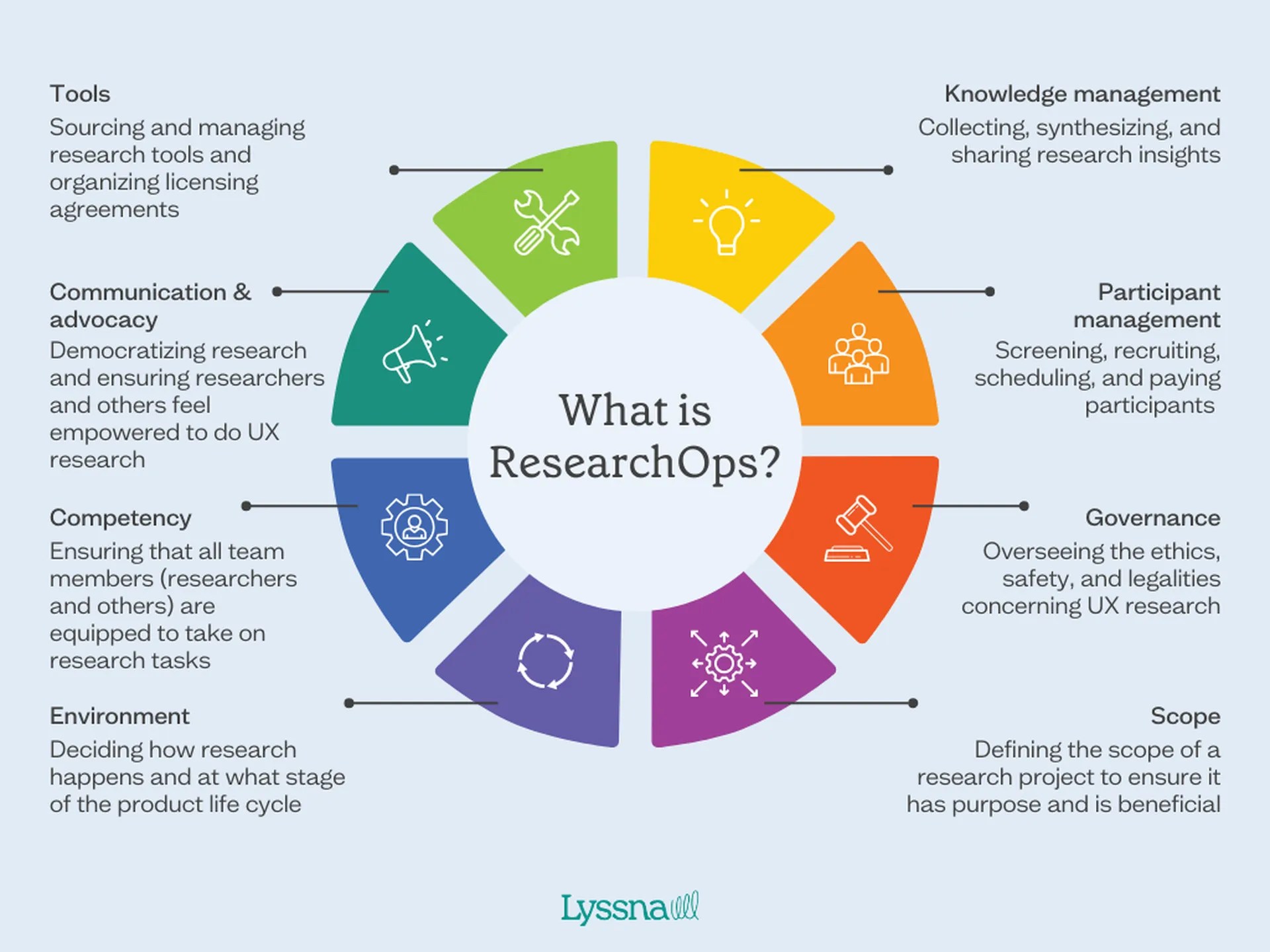
In my career I have never worked in a big enough research team to have a dedicated ResOps colleague. Often some of the roles that would fall under a ResOps manager have been distributed amongst other roles, especially managing subscriptions of Tools. This isn’t bad news though, I for one enjoy executing the full process. Not only does it make me a better researcher but it has also given me a better understanding of the full process and tasks involved with scoping, designing, executing and delivering research.
To date, I have been involved in ResOps that include:
- Tools; Onboarding of research tools and having responsibility for access and permissions.
- Knowledge Management; Collecting, synthesising and distributing research insights and findings. This has included the creation of documents such as templates (for all aspects of a research process – scoping templates through to final report templates) and shared hubs for insight collection such as verbatim repositories.
- Participant Management; Recruitment, scheduling, screening and paying incentives.
- Governance; Overseeing the ethics, safety, and legalities regarding UXR. This includes consent, data privacy, and information storage.
- Scope; Working with clients to define a scope to ensure that objectives will be met and that there is value in the project.
- Environment; Educating and guiding teams and stakeholders to decide how research happens and when – This should be done as early as possible in any product life cycle.
- Competency; Educating others and democratising research to follow best practice and follow detailed and useful how-to guides.
- Communication & advocacy; Democratising research and empowering non-researchers to feel confident to conduct research themselves. I have also been heavily involved in sharing, socialising and advocating for the value of UXR practices throughout organisations.
For more information and details regarding ResOps, the ResearchOps Community is a great place to go. Alternatively, download the 2024 ReOps Playbook from Rally.
 adamsymo